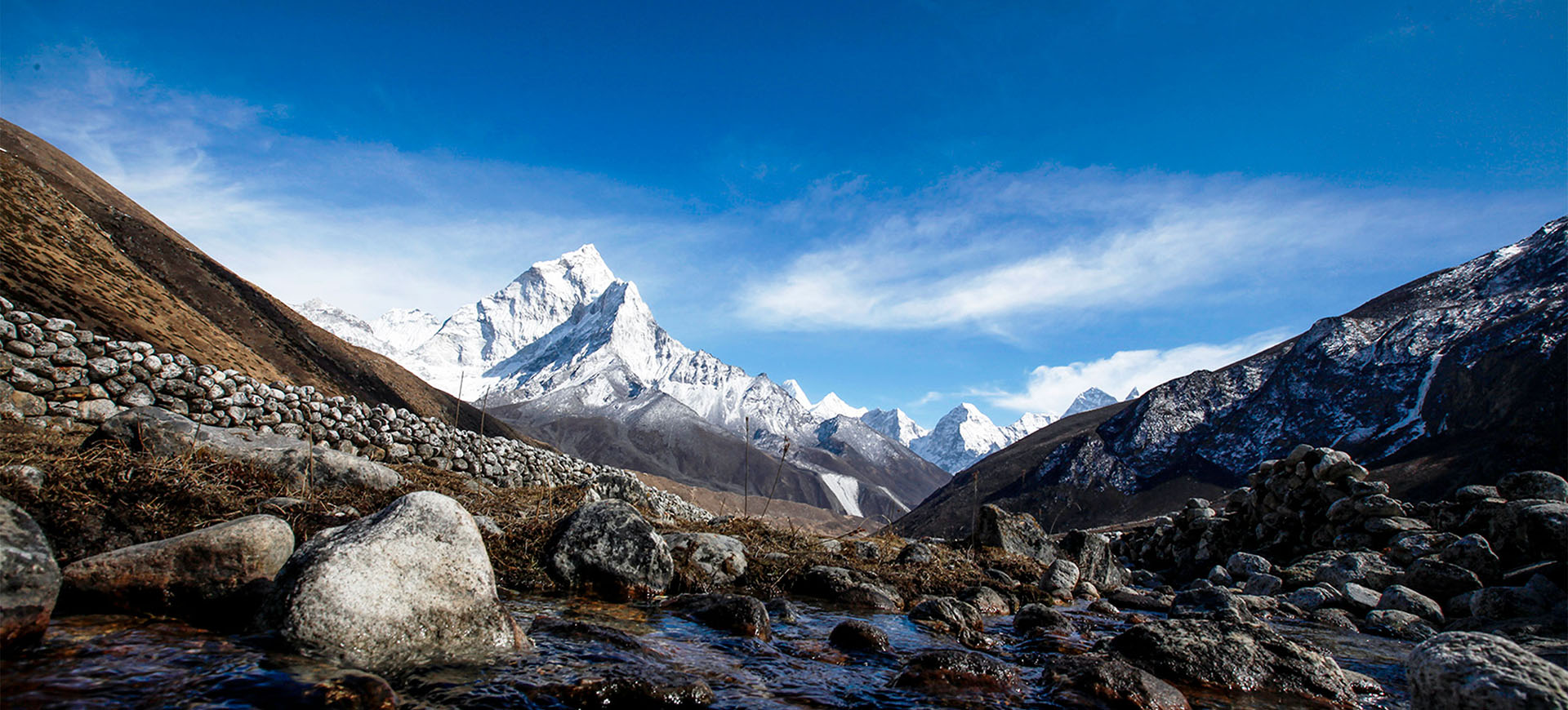
Are you eager to witness the majestic panorama of Everest? The Everest Base Camp Trek, completed within just two weeks, is one of the most sought-after Himalayan journeys in the world and a quintessential adventure in Nepal. Stepping onto the foot of the world’s tallest peak is a once-in-a-lifetime experience.
This journey, brimming with adventure, offers the mesmerizing beauty of the Great Himalayas, lush greenery, beautiful valleys, and the exotic wildlife and vegetation of Sagarmatha National Park. You’ll encounter religious shrines, monasteries, chortens, prayer wheels, long Mane walls, fluttering prayer flags, airy suspension bridges, torrential rivers, glacial lakes, and pristine waterfalls throughout the trek.
You are landed in the land of the Himalayas. Upon your arrival at Tribhuvan International Airport, Kathmandu, one of the representatives of Holy Mountain Treks awaits you outside the terminal gate.
After greeting, you will be sifted to your hotel. After some refreshment drinks, you will have a small pre-meeting with your guide and company members. They will clarify our upcoming epic journey to the base of Mt. Everest. In the evening, you can stroll around the streets of Thamel.
After an early meal, you will be transferred to the airport for your Lukla flight. Sighted with the airborne views of different shrines of Kathmandu valley, you will fly towards the Himalayan section.
The flight is scenic. After 30 minutes journey, we will be landed over narrow airstrips at Lukla airport shortly after we meet our porters and other staff to whom we hand over our duffle bags.
A trek begins now. The journey marches towards the Dudh Koshi River. Continuing the trip following the riverbed, we arrive at Phakding. On the way, we encounter a few ups and downs; otherwise, the way is easier and smooth.
In the peak seasons, the way is busy with trekkers and expeditioners. Animals such as donkeys and horses are also seen carrying goods. They have loads for the residents and visitors in the Khumbu region.
From Phakding, we head northward, following the Dudh Koshi River. Trekking continues with the farsighted views of peaks, passing pine, oaks, and rhododendron forests.
We are walking in the Sagarmatha National Park, following the riverbank. Reaching Jorsalle, the journey descends, walking smoothly towards Hillary bridge. Onwards, we have gradual ups and downs, passing lush forests, diverse flora, and fauna.
Now, we have an aerial view of Mt. Everest, Lhotse, and Nuptse. After a short walk, we reach Namche Bazaar-the gateway of Everest. Trekkers are welcomed by the Sherpa people with some refreshment drinks.
The views of mountains, landscapes, and vistas are amazing in Namche. It is popularly known as the capital of the Khumbu region. You can get bank services, ATMs, bakery services, supermarkets, pubs, and bars. If you lack some trekking equipment, you can buy it there.
As we are 3,440m above sea level, we should be careful regarding acute mountain sickness. Walking at a higher elevation, acclimatization is a must to be prevented high altitude problems. Staying hydrated, taking lots of fluids, soups, water, tea, and plenty of snacks also co-operates to escape altitude-related hazards.
It is an exploration day as well. In the daytime, we ascend to Syangboche airfield and further to Everest View Hotel. Elevating at 3962m above sea level, this hotel offers astonishing views of the Himalayan ranges.
Getting back to Namche Bazaar, we prepare for further trekking. Finally, with excellent food with warm hospitality, we go to sleep.
Leaving Khumbu’s capital, we head towards Tengboche. There is a lot to see today. We can glimpse Buddhist monuments, including stupas and gompas, throughout the trekking trial.
The trail reaching Phunki is gentle. A little ascend way leads us to the Tengboche village. We have tangible sights of Mt. Ama Dablam during the trek while passing lustrous Rhododendron forests.
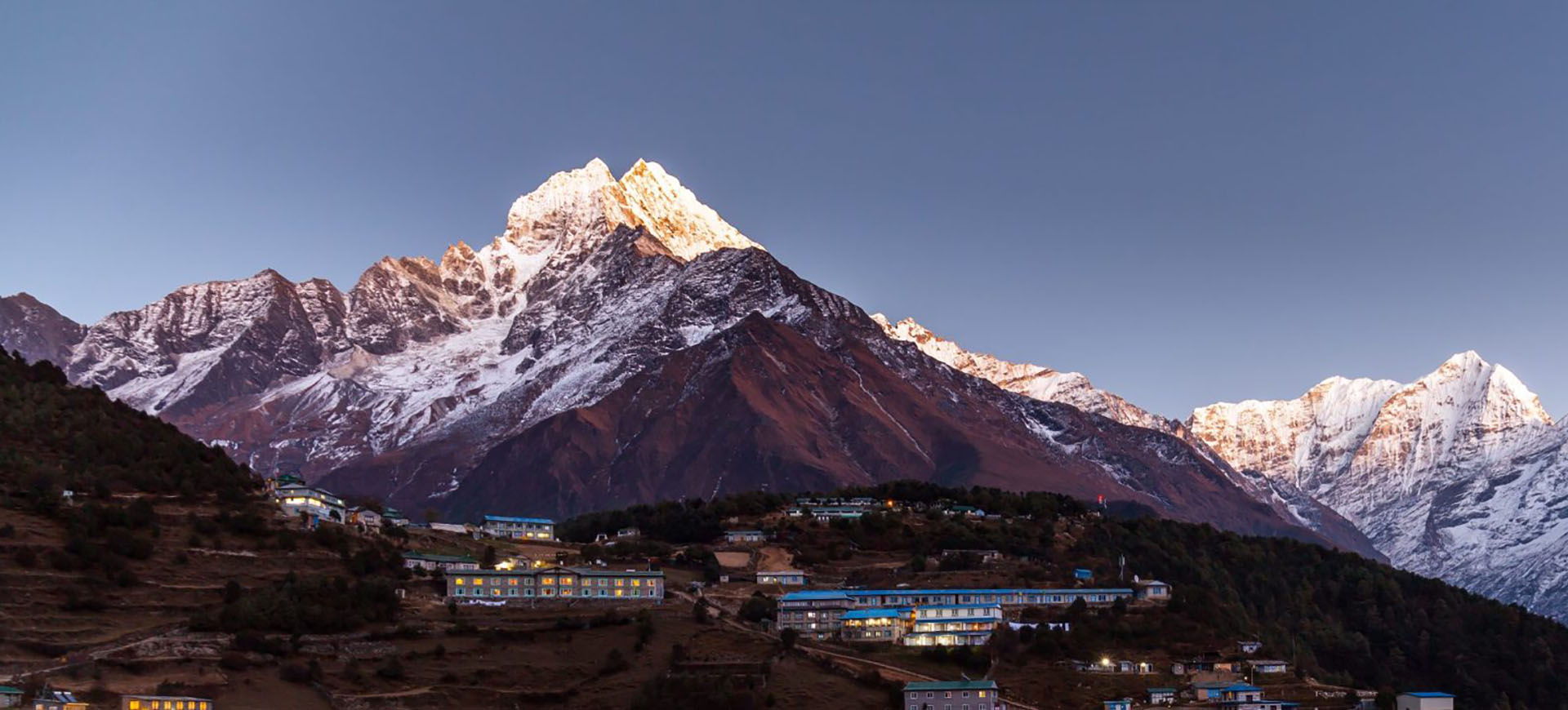
Tengboche is famous for its monastery. Tengboche monastery is the biggest monastery in the Khumbu section. Moreover, it lies in one of the World Heritage Sites-Sagarmatha National Park. From this point, visitors can also capture panoramic views of Mt. Everest, Lhotse, Nuptse, Thamserku, and Ama Dablam.
We watch evening chants, prayers, Buddhist ceremonies, and the last sun rays over the giant peaks and get back to the teahouse. Finally, after the delicious dinner of local taste, we go to our respective rooms to sleep.
After a delicious breakfast, the journey continues downwards, passing the magical timberlands of fir, rhododendron, and birch. Reaching Debuche, we have to cross the Imja river to landmark the village of Pangboche.
Continuing the trek, passing chortens and small settlements, we reach Imja valley and Lobouche river, and we reach Dingboche. Trekkers can observe picturesque potato, barley, and buckwheat fields.
Waking up with the first rays of the sun over the Himalayas is stunning. You are surrounded by giant peaks around.
Another acclimatization day is ahead. After having breakfast, we hike to Nagarjun hill. Reaching the top, we shall have close-up views of the mountains, terrains, and amazing landscapes.
While hiking, Trekkers capture the incredible views of Lhotse, Ama Dablam, Island Peak, and other snowcapped Himalayas today.
We should not forget the altitude problems. As we are already 4400m above sea level, we should acclimatize adequately to succeed in the journey easily.
A curated list of the most popular travel packages based on different destinations.